

















A Quick Look at the LV119 Overt Plate Carrier
LV119 Overt review
The "LV" in LV119 stands for Low Visibility. Originally, the platform was conceived to bridge the gap between a "slick" covert carrier and a full-scale battle vest. While the Covert version was designed to disappear under a jacket, the Overt version—the focus of this review—was developed for the "End-User" who requires high-intensity mission capabilities without the bulk of traditional legacy carriers.

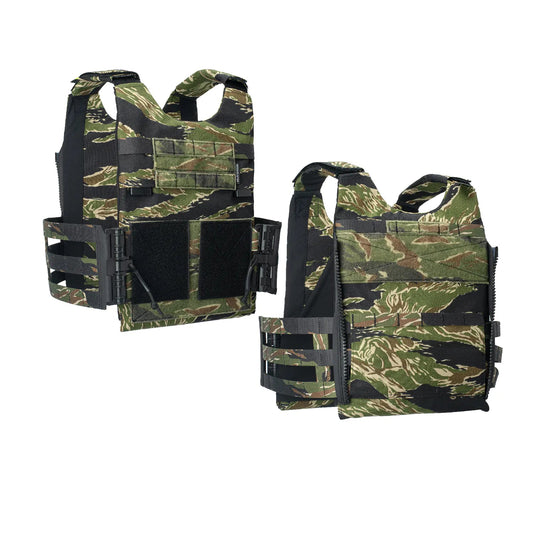
The Overt is the "loud" sibling. It retains the sleek, body-hugging profile of the original but integrates essential features for kinetic operations: MOLLE webbing, zip-on back panel integration, and advanced communication routing.
This modularity is the system’s greatest strength. It allows the user to mix and match. For instance, a user can run an Overt Front Bag for communication PTTs (Push-To-Talks) and a Covert Rear Bag to maintain a slim profile for vehicle operations.
The first thing you notice when handling the Overt components is the weight—or lack thereof. Devoid of 'legacy' features like excessive padding and heavy webbing, it is a 'minimalist' carrier in the truest sense, designed to carry only what you need to fight and nothing more.
The construction utilizes a sophisticated blend of:
500D Cordura: For the primary structural integrity.
Four-Way Stretch Softshell: On the interior plate pockets to allow the bag to "shrink-wrap" around different plate thicknesses (from thin SAPI plates to thick Polyethylene plates).
Hypalon Laminates: For high-stress areas like the shoulder straps, providing a low-profile weld for your rifle stock.
The Front Plate Bag
If the LV119 Ecosystem is about scalability, the Overt Front Plate Bag is where that scalability meets functional reality. While the Covert version is a "slick" bag designed to be forgotten, the Overt Front Bag is intentionally built to host the tools of the trade.

1. The Inner Document Pocket
LV119 utilizes the inner face of the plate bag (the side touching your body) for storage.
Wicking Softshell Construction: This internal pocket is made of a high-end, four-way stretch Tweave material. Not only is it durable, but it’s designed to wick moisture away from your base layer.
Standoff and Comfort: Because this pocket sits between you and the hard plate, it provides a slight "standoff" effect, increasing comfort during long hours of wear.
Mission Essentials: This is the perfect place to stash maps, reference cards (GRGs), or flat documents. Keeping these items on the inside ensures they are protected from the elements and don't add to the external bulk of the carrier.

2. The Placard
LV119 was a pioneer in the "Placard" movement. The front bag features two vertical (Quick Attach Surface Mount) Buckles.
Standardized Spacing: The buckles are spaced at the industry standard, meaning you aren't locked into Spiritus placards. You can run Esstac, Haley Strategic, or Ferro Concepts front flaps without issue.
Security: Below the buckles is a large field of loop Velcro. This secures the bottom of your placard, ensuring there is zero "flap" or movement when you are sprinting or transitioning between shooting positions.

3. Communications and Cable Management
This is where the Overt bag earns its name. It is designed to handle the "wire jungle" of modern tactical radios.
PTT Loops: The front bag features dedicated webbing loops on the upper chest. These are perfectly positioned to clip in your Push-To-Talk (PTT) units, ensuring they stay put and don't flop around.
The "Front Porch" Philosophy: When paired with Spiritus shoulder covers, cables from your radio are fed through the shoulder channels and emerge exactly where the PTT loops are located. This design keeps your "front porch" (the workspace on your chest) clean and snag-free, ensuring your sling or other gear doesn't get tangled in comms wires.

4. The Tweave
The sides of the plate bag utilize the same four-way stretch softshell mentioned earlier.
Universal Plate Fit: This material allows the bag to expand or contract. Whether you’re running a thin "SAPI-cut" plate or a thicker ceramic multi-curve plate, the bag "shrink-wraps" around the armor. This eliminates the "plate rattle" found in cheaper, static-sized carriers.


5. Shoulder Strap Geometry
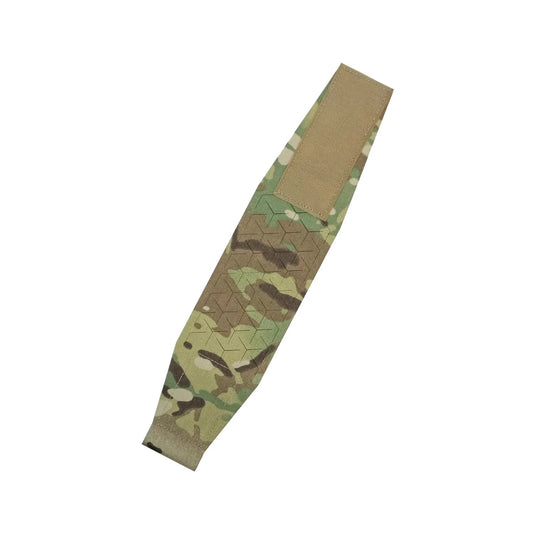
The shoulder straps on the front bag are made of a high-strength Hypalon laminate. They are deliberately thin to allow for a clean "stock weld" (meaning the butt of your rifle doesn't slip off a bulky pad when you aim). They are designed to be joined to the rear bag using a simple but secure Velcro overlap system, allowing for a massive range of height adjustment to get your plates sitting exactly where they should—covering your vitals, not your belly button.
The Rear Plate Bag
While the front bag is about personal access and control, the Overt Rear Plate Bag is designed to support the team and the mission. The rear bag is the primary differentiator between a minimalist "slick" setup and a high-end "assault" configuration.

1. The Zip-On Panel System
The most defining feature of the Overt Rear Bag is the inclusion of YKK #10 side zippers.
Mission Specificity: These zippers allow you to swap out entire back panels in seconds. You can have one panel set up for a "Direct Action" mission (flashbangs and extra mags for your teammates) and another for "Sustainment" (hydration and extra medical supplies).
The Advantage: Traditional MOLLE back panels are a nightmare to weave. If you’ve ever spent 20 minutes lacing a hydration pouch only to realize you need a different setup, you’ll understand why the zip-on system is the gold standard for modern professionals.
While the zippers handle the primary load, high-intensity movement—such as sprinting or breaching—creates "peel" forces that can stress the zipper teeth. To counter this, the LV119 strategically places specialized two-row MOLLE fields at the top and middle of the bag.


2. Upper-Middle Velcro Field
Between the zippers and the anchor rows lies a generous field of color-matched loop Velcro.
Identification: This is the primary real estate for "POLICE," "SHERIFF," or IR identification patches.
Panel Integration: Much like the front bag's placard interface, this loop field provides additional friction and security for back panels, ensuring they don't shift laterally when you are sprinting or breaching.
3. Dedicated Comm/Hydration Routing
Continuing the "Overt" philosophy of cable management, the rear bag is designed to keep your profile as clean as possible.
Routing Ports: At the top and sides of the bag, you’ll find ports. These are essential for routing radio antennas from the cummerbund to the back, or for feeding a hydration tube from an internal bladder or back panel over the shoulder.
Internal Channels: The design allows wires to be tucked away, preventing the "cable spaghetti" that often catches on door frames, vehicle seats, or thick vegetation.

4. Internal Tweave and Plate Fit
Following the design language of the front bag, the rear utilizes four-way stretch Tweave on the side.
Sizing Consistency: This allows the rear bag to accommodate various plate geometries. Whether you are using a standard SAPI cut or a more specialized "Swimmer" cut, the stretch fabric ensures the plate stays centered and doesn't "shift" during high-intensity movement.


5. The Shoulder Connection Point
The rear bag contains the end of the shoulder adjustment system. The rear bag straps slide into the front bag’s shoulder channels and secure with a massive amount of Velcro.
Comfort via Geometry: By keeping the connection point inside the bag’s architecture, LV119 ensures there are no buckles or hard hardware pressing into your collarbone. This makes the PC exceptionally comfortable when paired with a heavy backpack or rucksack.

The 3 Band Skeletonized Cummerbund
If the plate bags are the heart of the LV119, the cummerbund is the backbone. For the Overt mission profile, the 3 Band Skeletonized MOLLE Cummerbund represents the pinnacle of load-bearing performance, trading the simple stretch of elastic for a rigid, combat-ready architecture.

1.The Quick-Release Tubes
The defining feature of this cummerbund is the integration of Quick-Release Tubes technology.
Instant Egress & Ingress: Gone is the loud, clumsy "Velcro rip" every time you don or doff your carrier. The polymer Tubes allow you to slide the cummerbund into place silently and securely.
Tactical Reliability: Because the connection is mechanical, you get a consistent fit every time. You don’t have to worry about the front flap being slightly off-center or the Velcro losing its "stick" over years of use in muddy or sandy environments.


2. The Skeletonized Architecture
The "3 Band" design refers to the three horizontal rows of MOLLE webbing that make up the side profile.
Maximum Breathability: By removing the solid fabric found in traditional cummerbunds, Spiritus allows for massive airflow to your sides, which is critical during high-exertion movements.
Mounting Versatility: The skeletonized rows allow you to mount pouches on both the inside and outside of the cummerbund. This is ideal for keeping a radio or a small GP pouch close to the body while maintaining a slim external profile.

3. Internal Elastic Composite
While this cummerbund is categorized as "Non-Elastic" in the traditional sense, it features a sophisticated internal elastic composite material.
Rigidity Meets Comfort: This composite layer provides a rigid structural frame that prevents the cummerbund from "sagging" when you attach heavy side armor or multiple full magazines.
Enhanced Support: Unlike a purely static nylon strap, this composite has just enough "memory" to hug the torso tightly. It provides the support needed for heavy loadouts while maintaining the athletic, body-mapped fit that the LV119 is famous for.
4. Dimensions and Fitment Versatility
This cummerbund is highly adjustable, accommodating various body types and layering needs—from a t-shirt to a heavy cold-weather parka.
The Circumference: With a total adjustable circumference of approximately 42-48", it offers a wide fitment range.
The Side Length: From the edge of the front flap to the rear panel, the side length measures between 11-14". This specific geometry ensures that the "Tubes" stay positioned toward the front for easy reach, while the rear shock-cord lacing handles the bulk of the sizing adjustment.
5. The Shock-Cord Rear Attachment
True to the LV119 philosophy, the cummerbund attaches to the rear bag via a shock-cord (bungee) system.
Dynamic Articulation: This allows the "Skeletonized" frame to move with you. When you take a deep breath or twist your torso to enter a vehicle, the rear attachment point expands slightly.
Custom Tension: You can lace the top band tighter than the bottom band to match the natural "V-taper" of the human torso, ensuring the carrier remains stable without feeling like a restrictive corset.


Shoulder Comfort and Ergonomics
After assembling the plate bags and the cummerbund, the final step in the LV119 build involves the shoulders.
1. Shoulder Covers
Tri-Fold Shoulder Covers: These are the gold standard for the LV119. They wrap around the strap and offer internal routing for thick comms cables and hydration tubes. More importantly, they add just enough structure to prevent the straps from "bunching" under load.
The Ergonomic Trade-off: LV119 does not use thick "gel" padding. The philosophy is that a properly fitted, body-hugging carrier distributes weight through the torso, reducing the burden on the shoulders.


2. The Athletic Fit
The LV119 feels less like a vest and more like a piece of athletic apparel.
Range of Motion: Because the plate bags are cut to the exact dimensions of SAPI plates, there is no "dead space." You can reach across your body, climb, and transition your weapon without the carrier shifting or hitting your chin.
Heat Management: Unlike traditional carriers that rely on thick spacer mesh or Tweave linings, the LV119 utilizes an ultra-thin, minimalist material on the interior face. This streamlined construction avoids the use of bulky foam, allowing for surprisingly effective heat dissipation compared to more padded rigs.
The Trade-off: However, because it is designed to sit so tight to the body to maintain stability, you will still experience some heat buildup during high-exertion tasks—that is simply the inescapable nature of wearing body armor.
The Modular Placard
The LV119 Overt is a modular "skeleton" rather than a fixed vest. We are using a Placard—a removable front panel—which allows the operator to swap their entire loadout in seconds to meet changing mission needs.
In this review, we are demonstrating the platform's versatility through a specialized Placard setup. In tactical terms, a Placard is a removable front panel that allows the operator to swap their entire kit out in seconds to meet changing mission requirements.

Micro Fight Chassis MkV
The core is the Micro Fight Chassis MkV, a low-profile, MOLLE-covered placard. It houses an internal Rifle Magazine Insert, keeping three primary mags indexed and tight to the body for a slim profile.

Triple Elastic Magazine Pouch
Mounted to the MkV's front, this pouch provides high-retention storage. While designed for ammo, its flexibility makes it perfect for mission-essential electronics, like rangefinders or notebooks.

Pangolin Flap
To prevent snags during high movement, the Pangolin Flap is integrated on the right. It secures both the internal magazine and the outer elastic cell without compromising the draw speed of your remaining kit.

Lateral & Sub-Load Expansion
We've rounded out the setup with two utility components:
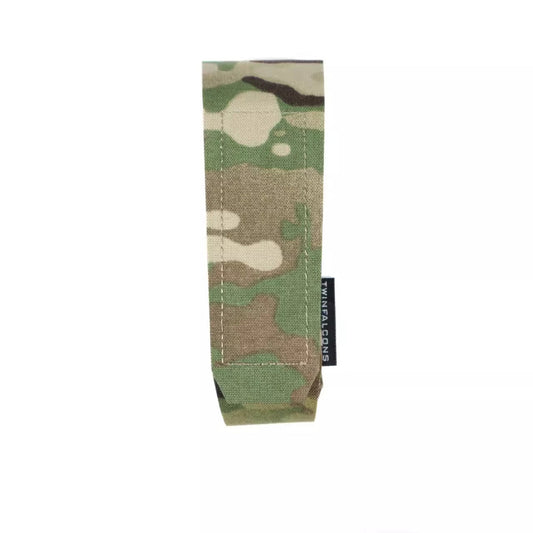
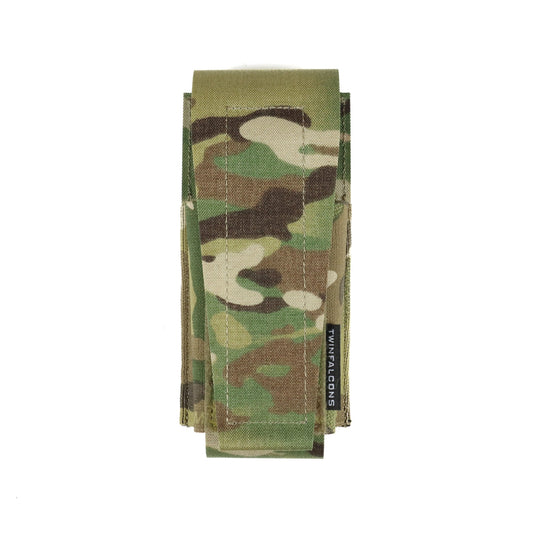
Single Elastic Pistol Pouch: Mounted left for a multi-tool, light, or spare mag.
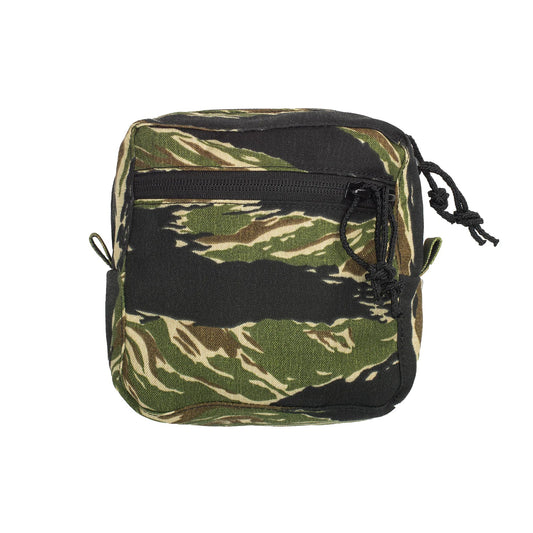
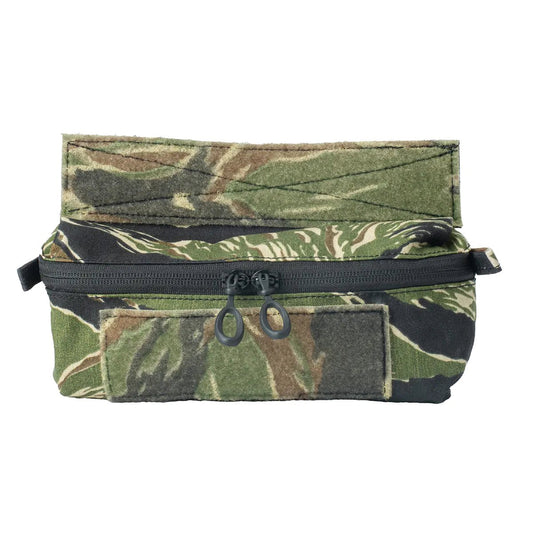
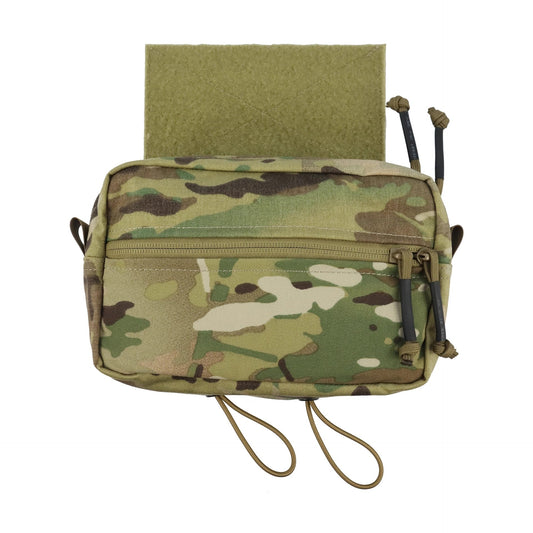
The Mini Dangler: A sub-load pouch hanging below the placard, ideal for an IFAK or technical tools.

Cummerbund Configuration
The cummerbund setup is intentionally asymmetrical, concentrating mission-essential tools on the left while keeping the right side clear for weapon manipulation.

Left Side: The Utility Hub The left flank is configured for maximum storage and communication:
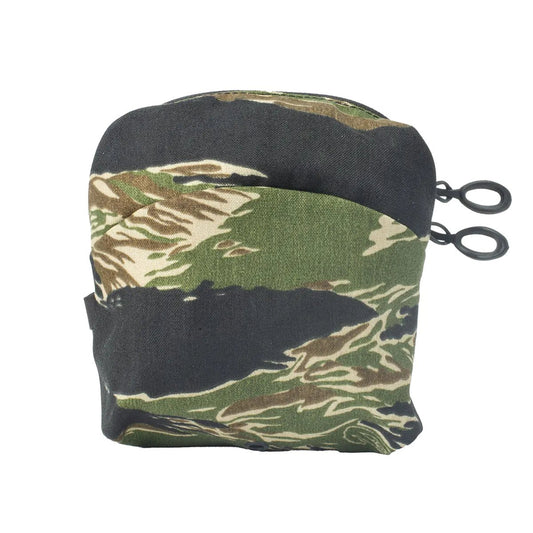
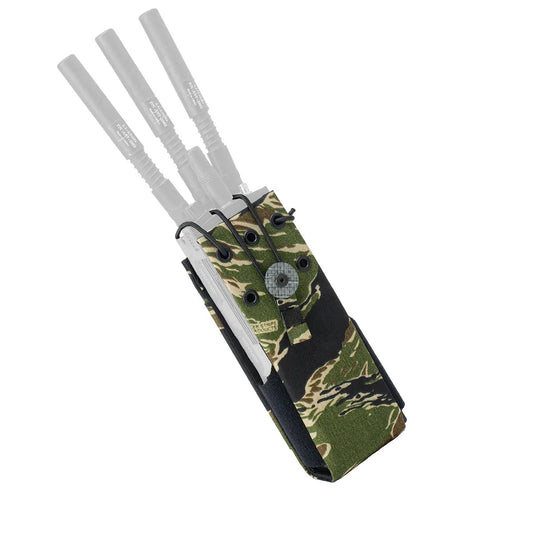
Radio Pocket (Inboard): Mounted against the body for stability, this keeps your comms secure and protects the radio from external snags.
Frag Bag (Outboard Front): Positioned forward for immediate access to ordnance or specialized gear.
General Purpose Pocket (6x5): Mounted toward the rear, this mid-sized pouch handles administrative items and mission tools. Interestingly, this 6x5 footprint is slightly more compact than a standard Small GP Pouch, offering a streamlined profile for the back-left quadrant.

Right Side: The Shooter’s Profile The right side is kept minimalist to prioritize speed and a clean draw:
Front Section: Left completely empty. This ensures a "slick" path for your sidearm draw and prevents interference when shouldering your rifle.
Small GP Pouch (Rear): A single pouch at the back for small essentials. Despite being labeled "Small," it offers more volume than the 6x5 on the opposite side, making it the primary storage for larger loose items on the right.

Final Verdict
It is the ultimate "LEGO set." The ability to constantly iterate on your setup is addictive and functional. The zip-on back panels and the Tubes cummerbund make it a tier-one choice for LE and Military operations. The LV119 Overt successfully bridges the gap between a low-vis carrier and a full-assault rig. It is a masterclass in modern tactical design—prioritizing mobility, cable management, and modularity over everything else.


